BUSINES
Road Food: The Complete Guide to Street Cuisine, Travel Flavors, and Local Food Culture

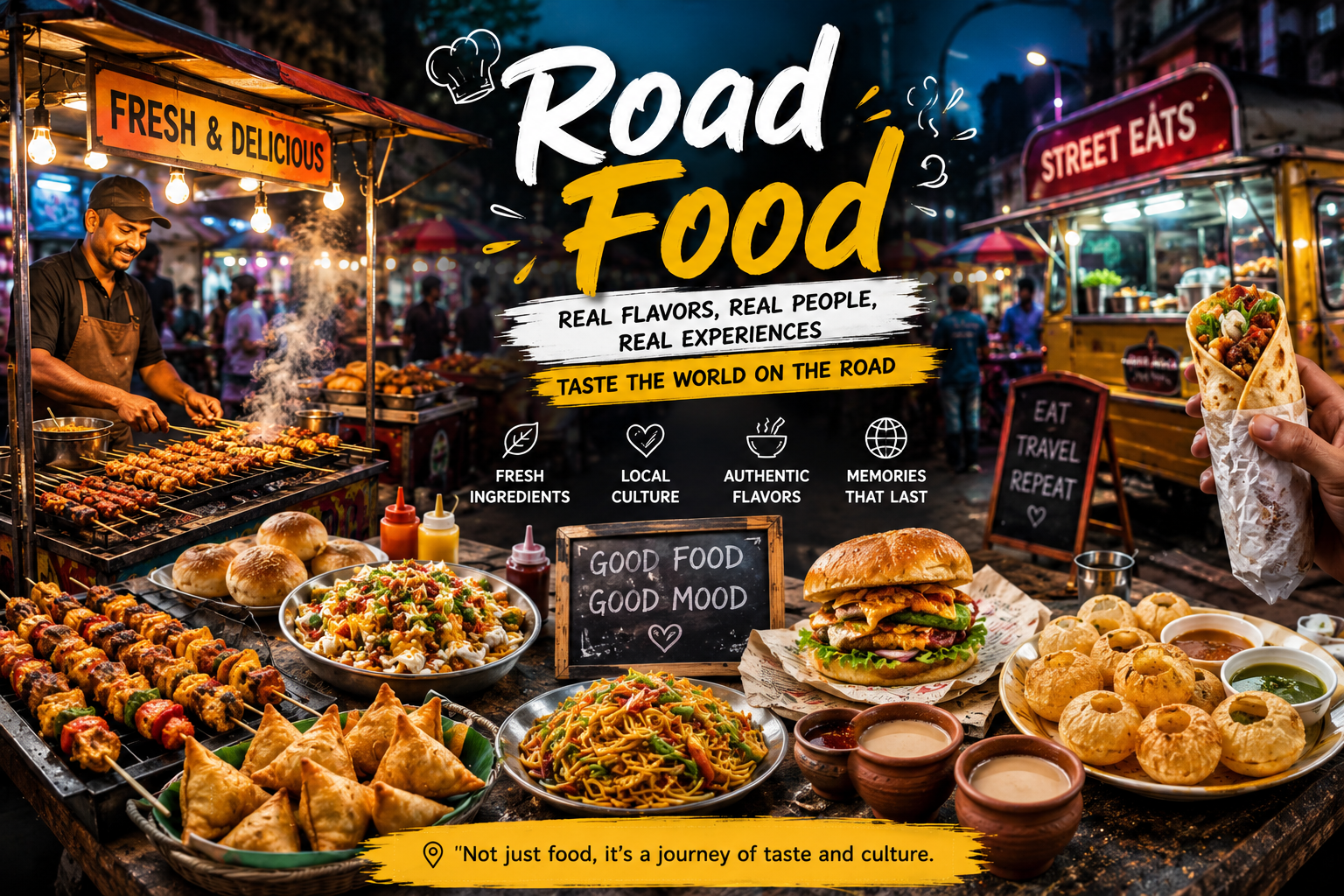
Road food is much more than a quick meal eaten during a journey. It represents the heart of local culture, the creativity of everyday cooks, and the unforgettable flavors that travelers discover while exploring new places. Whether you are driving across a country, walking through a busy market, or stopping at a roadside food stall, road food offers an authentic dining experience that often tells the story of a region better than any restaurant can.
Unlike expensive fine dining, road food is accessible, affordable, and full of character. Every country has its own version of roadside cuisine, from spicy grilled meats and freshly baked bread to sweet desserts and refreshing drinks. These dishes are usually prepared using traditional recipes that have been passed down through generations. The freshness, aroma, and vibrant atmosphere surrounding road food make it one of the most exciting parts of traveling.
Another reason roadfood has become so popular is its ability to bring people together. Locals and tourists often gather around the same food stalls, sharing conversations while enjoying delicious meals. The experience goes beyond eating because it creates memories connected to places, people, and traditions. In many regions, road food is considered an essential part of daily life rather than just a convenient option for hungry travelers.
As global tourism continues to grow, roadfood has gained recognition from food bloggers, travel influencers, and culinary experts around the world. Many travelers now plan entire trips around famous roadside dishes, proving that great food does not always come from luxury restaurants. Instead, some of the most memorable meals are found beside highways, busy streets, and colorful local markets.
Throughout this guide, you will discover everything about road food, including its history, cultural importance, popular dishes, health considerations, and why millions of people continue to choose roadside meals whenever they travel.
What Is Road Food?
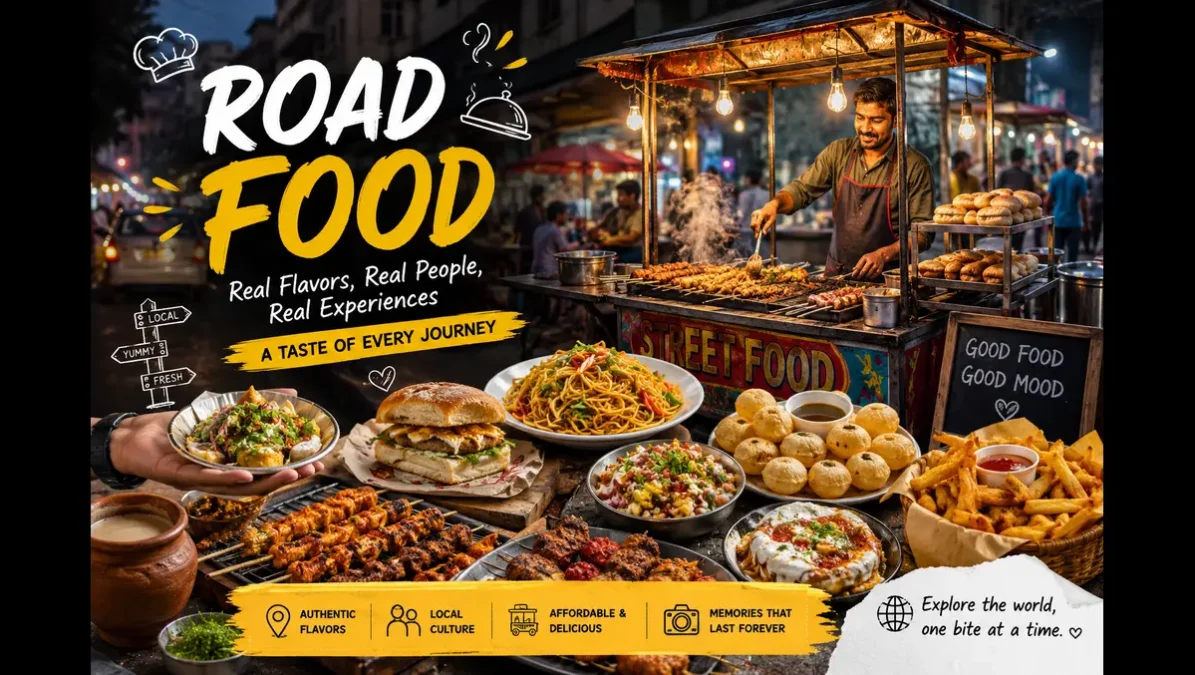
Road food refers to meals, snacks, and beverages sold along roads, highways, streets, and public marketplaces where travelers and local residents can enjoy freshly prepared food without entering a formal restaurant. These foods are designed to be convenient, flavorful, and affordable while reflecting the traditions of the surrounding region.
Unlike fast food served by large international chains, roadfood often comes from family-owned stalls, food carts, small trucks, and temporary roadside kitchens. Many vendors have spent decades perfecting recipes that have become local favorites. Their cooking techniques are often based on family traditions rather than commercial food production.
One of the defining features of road food is freshness. Vendors frequently prepare dishes right in front of customers, allowing people to watch ingredients being chopped, grilled, fried, steamed, or baked. This open cooking style adds excitement to the dining experience and creates trust between the vendor and the customer.
Road food also varies greatly depending on geography. Coastal regions may specialize in fresh seafood, mountain villages might focus on grilled meats and hearty soups, while tropical areas often feature fruit-based snacks and refreshing beverages. Every destination adds its own personality to roadside cuisine.
Because roadfood evolves naturally with local ingredients, seasonal produce, and regional tastes, it remains one of the most authentic ways to understand a destination. Travelers often discover flavors that cannot be found anywhere else, making each journey unique.
The History of Road Food
The story of road food stretches back thousands of years. Long before modern highways existed, merchants, pilgrims, and traders traveled great distances by foot, horseback, or caravan. Along these travel routes, local communities began selling simple meals to hungry travelers.
Ancient civilizations understood the importance of feeding people on the move. Markets developed near trade routes where vendors offered bread, roasted meat, soups, fruits, and beverages. These early forms of road food provided nourishment while supporting local economies.
As transportation improved, roadside eating became even more common. The arrival of stagecoaches, railways, bicycles, automobiles, and buses created new opportunities for entrepreneurs to serve travelers. Road food adapted alongside changing transportation methods, offering meals that could be prepared quickly without sacrificing flavor.
In many countries, family recipes became the foundation of successful roadside businesses. Parents taught cooking techniques to their children, who later expanded the family business while preserving traditional flavors. Some famous road food vendors today represent several generations of culinary expertise.
Modern road food combines ancient traditions with contemporary innovation. While many classic recipes remain unchanged, vendors continue introducing creative combinations that appeal to younger generations and international visitors. This balance between tradition and creativity helps road food remain relevant in today’s fast-changing culinary world.
Why Road Food Is So Popular
One of the biggest reasons road food continues to attract millions of people is its incredible flavor. Many roadside vendors focus entirely on preparing a small selection of dishes, allowing them to perfect every recipe over many years. This dedication often produces food that rivals expensive restaurants.
Fresh ingredients also contribute to the popularity of road food. Vendors frequently purchase vegetables, meat, seafood, herbs, and spices from nearby farms and local markets every morning. Because ingredients are used quickly, customers enjoy meals at their freshest.
Affordability is another major advantage. Travelers can enjoy satisfying meals without spending large amounts of money. Families, students, workers, and tourists all appreciate the value that road food provides. Many roadside dishes offer generous portions at prices that fit nearly every budget.
Convenience also plays a significant role. Travelers do not need reservations or long waiting times. They can stop briefly, order freshly prepared food, and continue their journey within minutes. This efficiency makes road food ideal for busy schedules.
The social atmosphere surrounding road food creates memorable experiences as well. People from different backgrounds gather around popular stalls, sharing recommendations and conversations while enjoying local specialties. This welcoming environment transforms a simple meal into an enjoyable cultural experience.
Social media has also increased the popularity of road food. Beautiful food photography, travel videos, and online reviews inspire millions of people to seek out famous roadside dishes during their vacations. Many vendors have become internationally recognized thanks to viral food content.
Road Food as a Reflection of Local Culture
One of the most fascinating aspects of road food is how closely it reflects local traditions. Every recipe tells a story about the history, geography, agriculture, and lifestyle of the people who created it. A single roadside meal can reveal centuries of cultural development.
Many ingredients used in road food are closely connected to the local environment. Coastal communities often rely on seafood, while farming regions feature vegetables, grains, and livestock raised nearby. Desert regions may emphasize preserved foods and flavorful spices, whereas tropical areas highlight fresh fruits and aromatic herbs.
Cooking techniques also differ from place to place. Some cultures prefer grilling over charcoal, while others specialize in steaming, baking, roasting, or stir-frying. These methods have often been refined over generations and remain an important part of local identity.
Road food also plays a central role during festivals and community celebrations. Temporary food stalls appear during religious holidays, sporting events, fairs, and cultural festivals, allowing visitors to experience traditional dishes prepared using authentic family recipes.
For travelers, enjoying road food is one of the easiest ways to connect with local communities. Instead of simply visiting tourist attractions, eating where local residents eat provides a more genuine understanding of everyday life and regional traditions.
Types of Road Food Around the World
Road food takes countless forms depending on where you travel. Every country has developed its own roadside specialties using locally available ingredients, traditional cooking techniques, and regional flavors. While the presentation may differ from one place to another, the goal remains the same: to provide fresh, delicious, and affordable meals for people on the move.
One of the reasons road food is loved worldwide is its diversity. Some roadside vendors specialize in grilled dishes cooked over charcoal, while others prepare soups, sandwiches, noodles, pastries, or sweet treats. The variety ensures that every traveler can find something that matches their taste, whether they prefer spicy, savory, vegetarian, or sweet foods.
Road food is also constantly evolving. Modern vendors often combine traditional recipes with contemporary ideas, creating exciting new dishes while preserving the authentic flavors that customers expect. This combination of tradition and innovation keeps roadside cuisine fresh and appealing for every generation.
Wherever you travel, road food reflects the lifestyle of local communities. The ingredients, spices, and preparation methods all tell stories about the region’s history, climate, and culture. That is why tasting roadside dishes is often considered one of the best ways to truly experience a destination.
Road Food in Asia
Asia is often considered one of the greatest destinations for road food lovers. Every country offers an incredible variety of roadside dishes that combine bold spices, fresh herbs, and traditional cooking techniques. From bustling city streets to quiet rural villages, food vendors serve meals that attract both locals and international visitors.
Countries like Thailand, India, Vietnam, Malaysia, Indonesia, Japan, South Korea, Pakistan, and China each have unique roadside specialties. Grilled meats, noodle bowls, rice dishes, dumplings, curries, seafood, and freshly prepared snacks are available almost everywhere. Many vendors prepare each order in front of customers, ensuring freshness and allowing diners to watch the cooking process.
One of the biggest attractions of Asian road food is affordability. Travelers can often enjoy filling meals for a fraction of the price charged by restaurants while experiencing authentic local flavors. Small family-run stalls are especially popular because recipes are often passed down through multiple generations.
Asian road food markets also create unforgettable atmospheres. The aroma of spices, sizzling grills, colorful vegetables, and lively conversations fills the streets, turning every meal into a memorable cultural experience rather than simply satisfying hunger.
Road Food in Europe
European road food combines centuries-old culinary traditions with regional ingredients that reflect each country’s history. While Europe is known for elegant restaurants, roadside cuisine remains an important part of everyday life.
Freshly baked bread, artisan cheeses, grilled sausages, roasted meats, seafood, pastries, and local desserts are commonly sold from roadside stands, village markets, and food trucks. Countries such as Italy, Germany, France, Spain, Greece, and Belgium each have distinctive roadside specialties that attract food lovers throughout the year.
Many European vendors emphasize quality over quantity. Ingredients are often sourced from nearby farms, fisheries, and bakeries, allowing roadside meals to maintain exceptional freshness. Simple recipes prepared with high-quality ingredients create flavors that are both comforting and memorable.
Seasonal festivals further showcase European road food. Christmas markets, summer fairs, harvest celebrations, and local cultural events introduce visitors to traditional dishes that may only be available during certain times of the year, making each visit unique.
Road Food in North America
North America offers one of the most diverse road food scenes in the world because it combines culinary traditions from many different cultures. Roadside diners, food trucks, barbecue stands, taco vendors, seafood shacks, and farmers’ markets all contribute to an exciting roadside dining experience.
In the United States, travelers often discover regional specialties depending on the state they visit. Barbecue, burgers, hot dogs, fried chicken, seafood, smoked meats, sandwiches, and freshly baked pies are popular roadside favorites. Canada adds its own flavors with dishes inspired by both indigenous traditions and European influences.
Food trucks have transformed modern road food across North America. Many talented chefs now operate mobile kitchens that serve gourmet versions of classic roadside meals while experimenting with creative recipes inspired by international cuisine.
Road trips remain deeply connected to North American culture, making roadside restaurants and food trucks an essential part of the travel experience. Many travelers even plan their routes around famous roadside eateries that have become local landmarks.
Road Food in South America
South America’s road food reflects the continent’s rich agricultural heritage, vibrant cultures, and diverse landscapes. Fresh ingredients play a central role in roadside cooking, resulting in meals that are colorful, flavorful, and satisfying.
Grilled meats, corn-based dishes, empanadas, tropical fruits, seafood, rice meals, beans, and freshly squeezed juices are common throughout the continent. Every country contributes its own unique flavors based on local traditions and available ingredients.
Street markets are particularly important in South America. Vendors prepare meals throughout the day using recipes that have often remained unchanged for generations. Visitors enjoy watching skilled cooks prepare dishes using techniques learned from parents and grandparents.
Hospitality is another defining feature of South American road food. Vendors often welcome customers warmly, creating friendly environments where locals and tourists naturally come together to share meals and conversation.
Road Food in Africa
Africa offers an extraordinary variety of road food, influenced by hundreds of cultures, climates, and agricultural traditions. Roadside vendors serve meals that highlight local grains, vegetables, spices, meats, seafood, and tropical fruits.
Many African roadside dishes are prepared over open charcoal grills, producing rich smoky flavors that are difficult to replicate in modern kitchens. Grilled meats, roasted corn, flatbreads, stews, rice dishes, fried snacks, and fresh fruit are widely available across the continent.
Regional diversity makes African road food especially exciting. Coastal communities often specialize in seafood, while inland regions focus on livestock, grains, and locally grown vegetables. Every destination offers something unique, allowing travelers to experience authentic local cuisine wherever they go.
Community plays an important role as well. Roadside food stalls often become gathering places where friends, families, and travelers meet to enjoy affordable meals while supporting small local businesses.
Why Travelers Love Exploring Road Food
For many people, discovering road food has become one of the most exciting parts of traveling. Instead of eating at familiar international restaurant chains, adventurous travelers seek out local roadside vendors to experience authentic flavors that truly represent the destination.
Every roadside stop offers an opportunity to discover recipes that may not appear in guidebooks or luxury restaurants. These hidden culinary gems often become the highlight of an entire trip because they provide genuine experiences rather than commercialized attractions.
Road food also encourages interaction with local communities. Travelers frequently ask vendors about ingredients, cooking techniques, or family recipes, creating meaningful conversations that deepen their understanding of local culture.
Photography has further increased the popularity of road food. Colorful dishes, open-air kitchens, vibrant markets, and lively street scenes provide perfect opportunities for travel photography and social media content. Many famous roadside vendors have gained international recognition simply because satisfied travelers shared their experiences online.
Fresh Ingredients Make Road Food Special
One reason road food tastes so different from mass-produced fast food is the emphasis on fresh ingredients. Many roadside vendors purchase vegetables, herbs, meat, seafood, dairy products, and spices from local suppliers every morning.
Fresh ingredients enhance both flavor and nutritional value. Since vendors typically prepare smaller batches throughout the day, customers receive meals that have not been sitting under warming lights for long periods. This commitment to freshness helps preserve the natural taste and texture of every ingredient.
Local sourcing also benefits nearby farmers and producers. By purchasing ingredients locally, roadside vendors strengthen regional economies while reducing transportation costs and supporting sustainable food systems.
Customers often notice the difference immediately. Fresh herbs, ripe vegetables, tender meats, and homemade sauces create flavors that are richer and more authentic than heavily processed alternatives. This dedication to quality is one of the reasons road food continues to earn loyal customers around the world
Conclusion
Road food is far more than a convenient meal enjoyed during a journey. It is a celebration of culture, tradition, and local flavors that brings people together through food. Whether you are exploring a busy city, traveling along scenic highways, or visiting a small village, road food offers an authentic taste of the region that cannot always be found in restaurants. Every roadside stall has its own story, recipes, and cooking style, making each meal a memorable experience.
One of the greatest strengths of road food is its diversity. From grilled specialties and freshly prepared snacks to hearty meals and delicious desserts, roadside cuisine reflects the creativity and heritage of local communities. Many vendors use fresh ingredients, family recipes, and traditional cooking methods that have been passed down through generations. This dedication to quality and authenticity keeps customers returning again and again.
Road food also plays an important role in supporting local economies. Small vendors, farmers, and family-owned businesses all benefit from the popularity of roadside dining. At the same time, travelers gain the opportunity to connect with local culture in a genuine and meaningful way. Sharing a meal from a roadside stall often becomes one of the most unforgettable moments of any trip.
As food tourism continues to grow, road food will remain an essential part of travel experiences around the world. Whether you are searching for bold flavors, affordable meals, or cultural discoveries, road food delivers an experience that goes beyond satisfying hunger. It creates lasting memories, introduces new traditions, and reminds us that some of the world’s best meals are found beside the road rather than inside luxury restaurants.
FAQs
What is road food?
Road food refers to freshly prepared meals, snacks, and drinks sold along roadsides, highways, streets, and local markets. It is known for being affordable, flavorful, and closely connected to local culture and traditions.
Is road food safe to eat?
Yes, road food can be safe when purchased from clean and reputable vendors who use fresh ingredients and maintain proper hygiene. Choosing busy food stalls with a high customer turnover is usually a good practice.
Why is road food popular among travelers?
Travelers enjoy road food because it offers authentic local flavors, reasonable prices, quick service, and the opportunity to experience the culture of a destination through its traditional cuisine.
What are the benefits of eating road food?
Road food allows people to explore regional specialties, support local businesses, enjoy freshly prepared meals, and experience unique flavors that may not be available in traditional restaurants.
Can vegetarians enjoy road food?
Absolutely. Many roadside vendors offer delicious vegetarian options made with fresh vegetables, grains, legumes, cheese, herbs, and local spices. Vegetarian road food is widely available in many countries and continues to grow in popularity.
YOU MAY READ ALSO
Road Food Guide: Best Street Food, Local Flavors & Travel Dining Experience
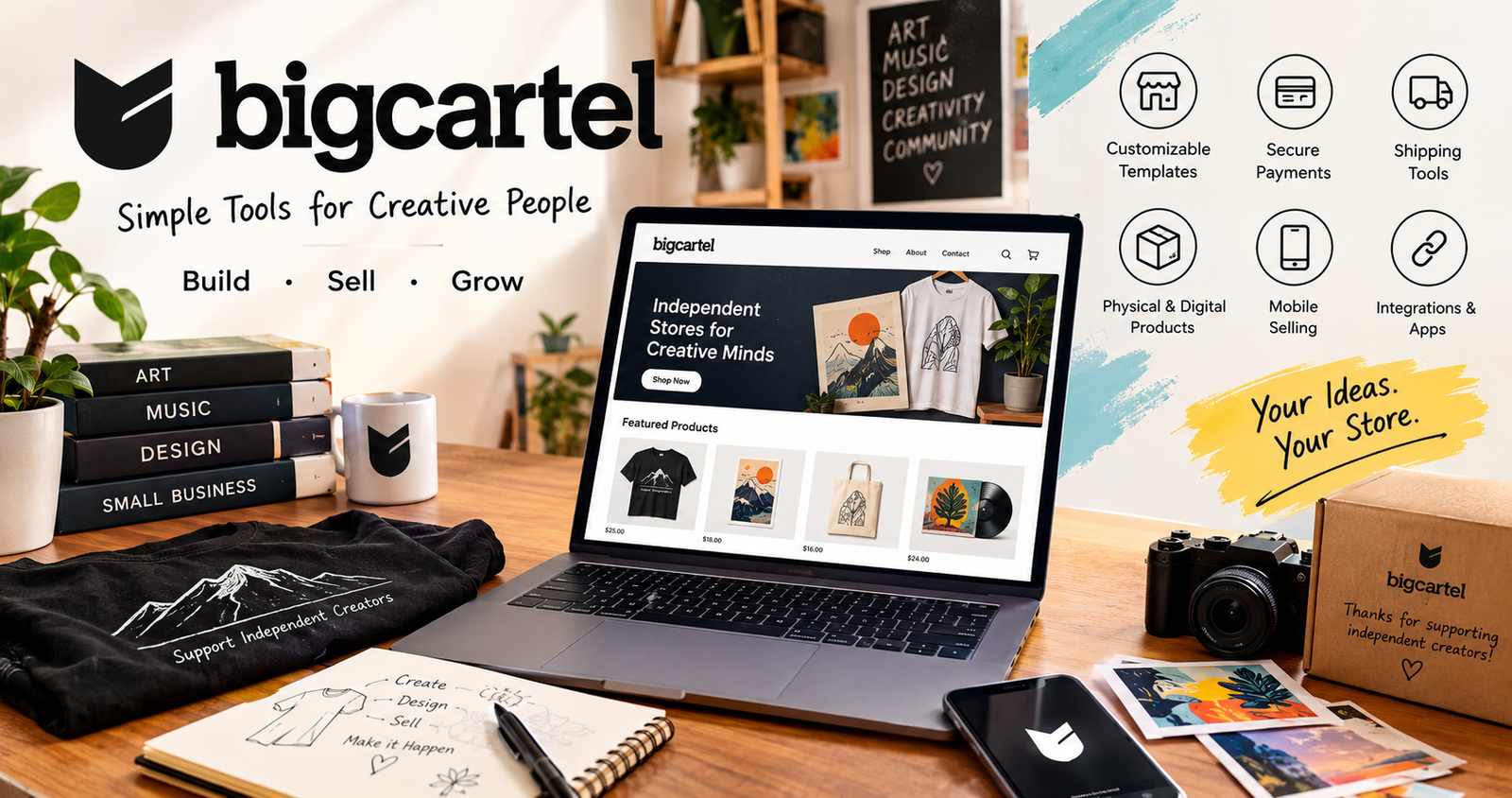
If you are an independent creator, artist, designer, musician, maker, or small business owner looking for a simple way to sell online, Big Cartel is a platform worth knowing about. It is designed around the idea that setting up an online store should not require advanced technical knowledge, complicated development work, or a huge budget. Big.Cartel focuses heavily on independent sellers and creative businesses that want their products to have their own space on the web.
Unlike large ecommerce systems that can feel overwhelming when you are just getting started, Big.Cartel keeps the store-building process relatively straightforward. You can choose a template, add products, configure payments and shipping, customize your storefront, and begin promoting your shop. The platform supports physical products, digital products, print-on-demand products, and memberships, giving creators several ways to build a business around what they make.
What Is Big Cartel?
Big Cartel is an ecommerce platform that allows independent sellers to create and manage their own online stores. The company originally grew from a need for independent bands to sell merchandise online and later expanded its focus to artists, designers, makers, entrepreneurs, and other small businesses. Its overall approach is centered on giving creators a simple storefront without requiring them to become ecommerce developers.
The platform provides tools for product listings, storefront design, payments, shipping, inventory, promotions, analytics, and other everyday ecommerce tasks. Big.Cartel also supports selling in person through its mobile app, so a creator can use the same business ecosystem for an online store and physical selling situations such as markets, events, pop-ups, or shows.
Why Big Cartel Was Created
The story behind Big Cartel helps explain why the platform feels different from many traditional ecommerce solutions. It began as a place where independent bands could sell merchandise at a time when there were fewer straightforward options for small creative businesses. From there, the company developed around the needs of independent sellers.
That creator-first background is still visible in the types of businesses Big.Cartel highlights. Artists, printmakers, jewelry makers, designers, photographers, ceramicists, illustrators, publishers, and musicians can all use the platform to create branded stores. Instead of trying to serve every type of corporation or massive retail operation, the platform has maintained a strong focus on independent commerce.
How Big Cartel Works
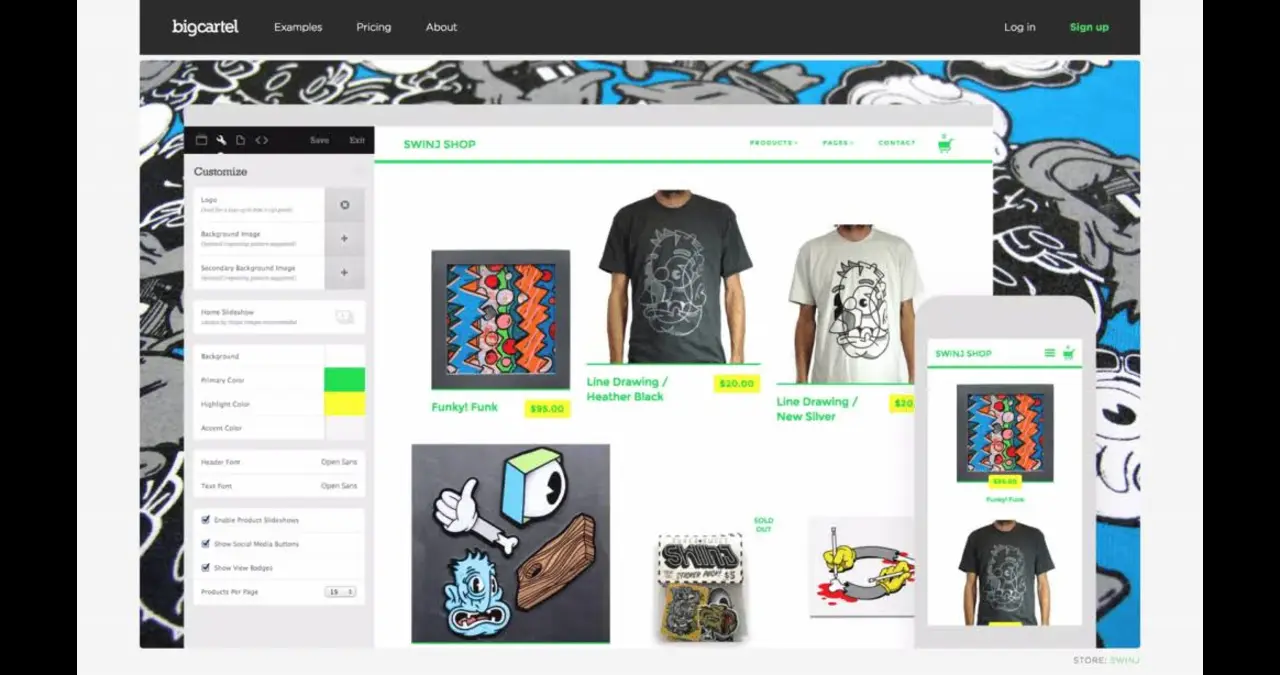
Getting started with Big.Cartel follows a relatively simple process. You begin by choosing a store design, adding products, setting up the important business details, and then promoting your shop. The platform provides customizable templates, allowing sellers to establish a storefront that feels connected to their brand rather than looking like a generic marketplace listing.
Product setup is another important part of the experience. Sellers can create listings with images, descriptions, prices, shipping information, and product variations. Big.Cartel also supports importing products from services such as Shopify, Etsy, and Squarespace, which can make switching platforms easier for sellers who already have an established catalog.
Big Cartel Store Design
A major reason creators consider Big.Cartel is its emphasis on visual storefronts. For an artist or designer, the appearance of an online shop can be almost as important as the checkout itself. Customers often want to see the personality behind the brand, and a clean storefront can help products receive the attention they deserve.
Big.Cartel offers customizable templates that allow sellers to adjust the appearance of their stores without needing to write code. The company describes its templates as beginner-friendly while still providing room for customization. Sellers can select a ready-made design and personalize elements such as colors, fonts, images, and other visual details.
Selling Physical Products With Big Cartel
Big Cartel works particularly well for sellers who create physical products. Clothing, jewelry, prints, handmade goods, candles, pottery, artwork, accessories, and merchandise can all be presented through a dedicated online store. Sellers can organize their catalog and provide customers with the information they need before purchasing.
Inventory management is also part of the platform’s ecommerce toolkit. This becomes useful when a creator has limited quantities of handmade products or needs to keep track of stock across different selling channels. Big.Cartel also provides shipping tools, shipment tracking, and discounted shipping-label options on its paid plans.
Selling Digital Products With Big Cartel
Physical products are not the only option. Big.Cartel also supports digital products, which can open the door to business models that do not depend on packaging or traditional shipping. Creators can sell items such as digital artwork, templates, music, educational resources, presets, ebooks, design assets, and other downloadable files.
Digital products can be attractive because the seller does not have to repeatedly manufacture or package the same item. Once a digital product is created, it can potentially be sold to customers in different locations without the logistics associated with physical inventory. Big Cartel’s digital-product tools are designed to allow creators to offer these products alongside physical goods in the same storefront.
Big Cartel for Artists
Artists are one of the audiences most closely associated with Big.Cartel. Painters, illustrators, printmakers, photographers, and other visual creators can use the platform to display their work and turn individual pieces or collections into products.
For artists, owning a dedicated storefront can also help establish a recognizable brand. Instead of relying entirely on a marketplace environment, an artist can direct followers from social media, email newsletters, events, or a personal website toward a store designed around their own work. Big Cartel specifically positions itself as a platform for independent creators who want a place to sell what they make.
Big Cartel for Musicians
Musicians and bands have a particularly interesting connection with Big.Cartel because the company originated from the independent music scene. Today, musicians can use the platform to sell merchandise, physical music products, digital music, and other offerings from a single store.
The platform also supports in-person selling, which can be useful for musicians selling merchandise at concerts or events. According to Big.Cartel, musicians and labels can combine physical and digital offerings, connect print-on-demand services, and use membership features for exclusive content or product access.
Big Cartel for Clothing Brands
Small clothing brands can use Big.Cartel to create a storefront without building an ecommerce system from scratch. Apparel businesses can display product photography, describe materials and designs, provide variations, and manage their online inventory through the platform.
Print-on-demand integrations can also be useful for creators who do not want to hold large amounts of physical inventory. A designer can create artwork for apparel and connect suitable services that handle production and fulfillment. Big.Cartel provides easy-install apps and integrations intended to extend the basic store experience.
Big Cartel Pricing
Pricing is an important part of any ecommerce decision, especially for a new creator who may not have predictable revenue yet. Big Cartel currently offers a limited free option and paid plans with additional selling features. Its current pricing information lists the Platinum plan at a monthly fee after its trial period and the Diamond plan at a higher monthly rate for stores that need additional growth features.
The platform also promotes a straightforward fee structure. Big.Cartel states that it does not charge transaction fees on its plans, although payment processors such as Stripe and PayPal can still charge their own processing fees. Sellers should therefore distinguish between platform fees and payment-processing costs when calculating the actual cost of running a store.
Big Cartel Free Plan
The free option can be useful for someone who wants to explore the platform before committing to a paid subscription. A beginner can use it to understand how the storefront works and decide whether the platform fits their business model.
However, free plans naturally have fewer features than premium plans. If a business needs more advanced selling tools, additional customization, or features designed for growth, moving to a paid plan may become necessary. Checking the current official plan comparison before making a decision is important because ecommerce features and pricing can change over time.
Big Cartel Premium Features
Paid Big Cartel plans add features designed for sellers who need more control over their stores. Current premium features include custom domains, physical and digital product selling, store customization, shipping tools, inventory management, product imports, promotional tools, and integrations.
Higher-level features can become useful as a shop grows. Big.Cartel’s Diamond plan currently includes tools such as abandoned-cart recovery, scheduled product drops, password-protected products, expanded app connectivity through Zapier, and priority human support. These features are aimed more toward sellers who have moved beyond the basic storefront stage.
Big Cartel Payments
Payment flexibility is essential for an online store because customers expect familiar checkout methods. Big.Cartel supports payment options including cards and services such as PayPal, with available payment methods depending on the seller’s setup and location.
The important thing for a seller is to make the checkout process clear and convenient. Customers should not have to wonder how they can pay or whether their preferred payment method is supported. Before launching a store, sellers should review the available payment providers for their country and understand their processing fees, payout rules, and requirements.
Big Cartel Shipping Tools
Shipping can become one of the more complicated parts of running an ecommerce business, especially when a creator begins receiving orders from different regions. Big.Cartel provides shipping-related tools designed to make order fulfillment easier, including shipping-label printing and shipment tracking on its paid offerings.
A good shipping strategy should go beyond simply choosing a carrier. Sellers need to think about packaging, shipping zones, delivery expectations, return policies, and product protection. Big.Cartel can provide the storefront tools, but the seller still needs to create a shipping process that makes sense for the products and customers.
Big Cartel Mobile Selling
A modern creator may not always sell from behind a desktop computer. Artists can meet customers at markets, musicians can sell merchandise at shows, and makers can participate in pop-up events. Big.Cartel supports mobile selling through its app, allowing sellers to manage their stores and accept payments in person.
This online-and-offline approach can be useful because inventory and sales activity can remain connected to the same store ecosystem. Instead of maintaining completely separate systems for online and event sales, a seller can use Big.Cartel as a central place for managing the business.
Big Cartel and Print on Demand
Print on demand has become an accessible business model for independent designers. Instead of purchasing a large amount of merchandise upfront, creators can connect with fulfillment providers that produce and ship products when customers place orders.
Big.Cartel supports easy-install apps for print-on-demand services. This gives designers another way to sell products while reducing some of the inventory responsibilities associated with traditional retail. However, sellers should still research production quality, delivery times, customer support, profit margins, and return policies before choosing a print-on-demand provider.
Big Cartel Marketing Tools
Creating a store is only the beginning of ecommerce. Customers need a reason to discover the shop, explore its products, and eventually make a purchase. Big.Cartel provides tools for promotions, discounts, social selling, advertising connections, and other marketing activities.
The platform can also connect with services such as Google Shopping and social platforms. These connections can help sellers extend their product visibility beyond the storefront itself. Still, successful marketing depends heavily on the seller’s content, audience, product quality, positioning, and consistency.
Growing Your Store With Big Cartel
Growth does not necessarily mean adding hundreds of products. For an independent business, growth can mean developing a recognizable brand, increasing repeat customers, improving product presentation, or creating better relationships with an existing audience.
Big.Cartel provides a foundation for these activities, but the creative strategy remains in the seller’s hands. A shop can grow through social media content, email marketing, collaborations, product launches, limited releases, customer referrals, or educational content. The strongest approach will depend on the type of business and the audience it serves.
Big Cartel Apps and Integrations
No ecommerce platform can provide every specialized feature directly inside its core dashboard. That is why integrations can be important. Big Cartel offers easy-install apps for areas such as print on demand, product reviews, and marketing. Its higher-tier offering also supports connections with a large number of apps through Zapier.
These integrations allow sellers to build a more customized business workflow. A creator might use one service for fulfillment, another for reviews, another for marketing automation, and another for customer management. The goal is not to install every available app, but to choose tools that solve genuine problems without making the business unnecessarily complicated.
Big Cartel SEO Potential
Search engine optimization can help an online store attract visitors who are actively looking for relevant products. Product titles, descriptions, page structure, images, internal links, and useful content can all contribute to a store’s visibility.
Big Cartel provides the basic environment for creating product pages and a branded storefront, but SEO success still requires careful work from the seller. Clear product descriptions are particularly important because they should explain what the product is, who it is for, and why someone might want it. Sellers should also use natural keywords rather than forcing repetitive phrases into their pages.
Big Cartel for Beginners
One of the strongest reasons beginners may consider Big Cartel is its relatively straightforward approach. The platform is built around the idea that independent sellers should be able to launch without needing extensive technical knowledge. Its official setup process focuses on choosing a template, adding products, configuring the store, and getting the shop in front of customers.
For someone launching a first ecommerce business, simplicity can be valuable. A complicated dashboard may provide dozens of features, but those features are not necessarily useful if they prevent the seller from getting the store live. Big Cartel’s creator-focused approach can help reduce that initial barrier.
Advantages of Big Cartel
Big Cartel offers several features that can appeal to independent sellers. Its creator-focused identity, straightforward store setup, customizable designs, support for physical and digital products, and lack of platform transaction fees are important parts of its value proposition.
Another advantage is the ability to combine online selling with in-person commerce. A creator who sells through a website, social media, events, and markets can build those activities around the same store. This can make Big Cartel especially relevant for businesses where the owner personally creates, promotes, and sells the products.
Things to Consider Before Choosing Big Cartel
Big Cartel is not automatically the right platform for every business. A seller should consider product catalog size, required integrations, customization needs, marketing requirements, international selling requirements, payment availability, and future growth plans before choosing an ecommerce system.
Large businesses with highly complex operations may need a platform designed around advanced enterprise workflows. On the other hand, a small creative business may prefer a simpler system. The important question is not whether a platform has the largest feature list, but whether its features match the actual needs of the business.
Big Cartel vs. Marketplace Selling
There is an important difference between owning a storefront and selling primarily through a marketplace. A marketplace can provide access to an existing audience, while an independent store gives the seller more control over branding and the customer experience.
Big Cartel focuses on the independent-store model. Sellers can create a storefront that represents their own brand and then bring visitors to it through social media, search engines, advertising, email, partnerships, or other channels. This means sellers generally need to take more responsibility for attracting traffic, but they also have more control over how their brand is presented.
Big Cartel vs. Larger Ecommerce Platforms
Big Cartel and larger ecommerce platforms can serve different types of businesses. A massive platform may offer a broader ecosystem of features for complex operations, while Big Cartel concentrates on independent sellers and creative businesses.
For a small brand, simplicity can be more useful than having every possible enterprise feature. For a rapidly expanding company with complicated inventory, multiple teams, extensive automation, and specialized operational requirements, a broader ecommerce ecosystem may make more sense. The right choice depends on the business model rather than the popularity of a particular platform.
How to Build a Successful Big Cartel Store
A successful Big Cartel store starts with strong products, but presentation matters too. Use high-quality product photographs, write clear descriptions, make pricing easy to understand, and provide useful information about shipping and returns.
Your storefront should also feel consistent. Use a recognizable visual identity across product images, social media, packaging, and the website. When visitors immediately understand what the brand sells and what makes it different, the store becomes easier to remember.
Marketing should then bring the right people to the shop. Instead of trying to promote everything everywhere, focus on channels where your ideal customers already spend time. Artists may benefit from visual social platforms, musicians can build around their fan communities, and niche product creators can combine search traffic with educational or entertaining content.
Final Thoughts on Big Cartel
Big Cartel has built its identity around independent creators, artists, musicians, makers, and small businesses that want a straightforward way to sell online. Its history, product features, pricing structure, templates, integrations, digital selling options, and in-person tools all reflect that creator-focused approach.
For someone who wants to turn creative work into an online business without getting buried in technical complexity, Big Cartel can provide a practical starting point. The platform gives sellers the tools to build a branded store, list products, accept payments, manage orders, promote products, and expand their operations as their needs develop.
Ultimately, the value of Big Cartel depends on how well it fits a particular business. A great platform cannot replace strong products, thoughtful branding, reliable customer service, or consistent marketing. But when the tools and business model match, Big Cartel can provide a clean foundation for turning creative work into a real online storefront.
Conclusion
Big Cartel provides a simple and creator-focused way to build an online store without making ecommerce feel unnecessarily complicated. Its tools are designed around independent sellers, artists, musicians, designers, makers, and small businesses that want to showcase their products through a branded storefront. From product management and customization to payments, shipping, digital products, and integrations, Big Cartel gives creators a practical foundation for selling online.
The biggest benefit of Big Cartel is its straightforward approach. Instead of overwhelming new sellers with complex features, it focuses on the tools that independent businesses commonly need. Whether you are selling handmade products, artwork, clothing, music, digital downloads, or merchandise, Big Cartel can help you create a professional online presence while keeping the setup relatively manageable.
Frequently Asked Questions
What is Big Cartel used for?
Big Cartel is an ecommerce platform used to create and manage online stores. It is particularly popular among independent creators, artists, musicians, designers, and small businesses that want to sell physical or digital products online.
Is Big Cartel good for beginners?
Yes, Big Cartel can be suitable for beginners because its store-building process is designed to be straightforward. Users can choose a storefront design, add products, configure important store settings, and begin selling without needing advanced coding knowledge.
Can you sell digital products on Big Cartel?
Yes, Big Cartel supports digital products. Creators can use the platform to sell downloadable products alongside physical merchandise, making it useful for businesses with different types of products.
Does Big Cartel support custom domains?
Yes, custom domains are available with supported paid plans. A custom domain can help create a more professional and memorable web address for a business and strengthen its overall brand identity.
Can Big Cartel help a small business grow?
Big Cartel can provide the ecommerce foundation a small business needs, including storefront tools, product management, payment options, shipping features, promotions, and integrations. However, long-term growth also depends on product quality, branding, marketing, customer service, and the seller’s ability to attract and retain customers.
YOU MAY READ ASLO

If you are searching for other sites like Tomoson, you are probably looking for a platform that can connect your brand with influencers, bloggers, reviewers, or content creators without making the entire outreach process feel complicated. Tomoson has been associated with product promotion, creator collaborations, reviews, and influencer campaigns, but the influencer marketing space has grown considerably. Different platforms now focus on creator discovery, campaign management, audience analytics, user-generated content, affiliate marketing, and long-term partnerships.
The good thing about having more choices is that you do not have to force every campaign into the same platform. Some other sites like Tomoson are designed for quick creator connections, while others are built for brands that need detailed reporting, ecommerce integrations, relationship management, or larger creator databases. Understanding these differences can make it much easier to find a service that fits your actual marketing workflow.
Why People Search for Other Sites Like Tomoson
The reasons for searching for other sites like Tomoson can vary depending on the brand or creator. A small business may simply want access to more influencers, while an established ecommerce company might need sophisticated campaign tracking and sales attribution. As influencer campaigns become more complex, basic creator discovery is often only one part of the process.
Another reason is specialization. One platform might be excellent for product reviews, another may concentrate on social creators, and another may provide stronger tools for long-term influencer relationships. Recent comparisons of Tomoson alternatives commonly highlight creator discovery, analytics, campaign workflows, ecommerce integration, payments, and reporting as important factors when evaluating platforms.
What Makes a Good Tomoson Alternative?
A useful alternative should solve a specific problem rather than simply provide another place to search for influencers. Before joining a platform, think about the type of creators you need, the social channels that matter to your audience, the content you want produced, and how you plan to measure campaign performance.
Creator discovery is particularly important. Strong search tools can help brands narrow creators according to niche, audience characteristics, engagement, location, and other campaign requirements. However, follower count alone should not determine whether a creator is suitable. Audience relevance and content quality can be just as important.
Campaign management is another major consideration. If a platform allows communication, briefs, content collection, payments, and reporting to happen in one place, it can reduce the amount of manual work involved. Larger influencer programs may also benefit from relationship-management features and ecommerce integrations.
Upfluence
Upfluence is one of the names frequently mentioned when marketers research other sites like Tomoson. It takes a more data-focused approach to influencer discovery and campaign management. Brands can use creator databases and audience information to identify potential partners rather than relying entirely on manual outreach.
This type of platform can make sense for businesses that have moved beyond occasional product collaborations and want a more organized influencer program. Upfluence is also commonly associated with ecommerce-oriented campaigns and performance measurement, making it relevant when a brand wants to connect creator activity with commercial results.
Aspire

Aspire is another option worth researching among other sites like Tomoson. Aspire is positioned around creator relationships and campaign workflows, which can be useful for brands that want ongoing collaborations instead of isolated promotional campaigns.
The distinction is important because influencer marketing often becomes more valuable when a brand develops relationships with creators over time. Instead of repeatedly searching for new people, a company can build a network of creators who already understand its products, audience, tone, and expectations. Aspire is commonly discussed as a platform for growing brands that need campaign organization and relationship management.
Afluencer
Afluencer can be considered by smaller businesses and marketers looking for a relatively straightforward way to connect with creators. Platforms in this category are useful when the primary requirement is discovering potential partnerships without adopting an elaborate enterprise marketing system.
Afluencer is often mentioned alongside Tomoson-style marketplaces because the basic concept is familiar: brands can look for creators and develop collaborations around products or campaigns. This can appeal to businesses that value simplicity and direct communication.
IZEA
IZEA is another established name in the creator marketing space. Its approach covers sponsored content and influencer campaigns across different types of media, making it relevant for brands that want more than conventional product-review activity.
One useful characteristic of a broader creator platform is flexibility. A campaign might require a blog article, social content, video material, or another form of sponsored creative. A platform that supports multiple formats can reduce the need to search for a completely different service whenever the content strategy changes.
Influence.co
Influence.co is another platform that appears in discussions about other sites like Tomoson. It has a creator-focused community and can be useful for discovering influencers and building professional connections.
For smaller brands, networking can be just as valuable as campaign automation. A company may discover a creator through a platform, review the creator’s content, start a conversation, and eventually develop a direct partnership. This type of relationship-building can be particularly useful when authenticity and niche relevance matter more than sheer creator volume.
Intellifluence
Intellifluence is particularly relevant to marketers interested in product-review campaigns and creator collaborations. Its model is frequently compared with the simpler marketplace approach associated with Tomoson.
The attraction of a review-oriented platform is that it can be easier to create campaigns around a clearly defined product. A brand may want creators to try something, produce content, provide feedback, or discuss their experience with an audience. This makes platforms in this category worth considering when product discovery and review activity are central to the campaign.
CreatorIQ
CreatorIQ represents a different side of the influencer marketing market. Rather than focusing primarily on simple creator-product connections, enterprise-oriented platforms are designed around larger programs, deeper analytics, and more structured campaign operations.
This distinction matters for growing companies. A small brand might only need creator discovery and basic communication, whereas a larger organization could require centralized reporting, team workflows, audience intelligence, and broader campaign management. CreatorIQ is frequently included in comparisons involving enterprise influencer marketing tools.
GRIN
GRIN is another platform marketers may encounter when researching other sites like Tomoson. It focuses heavily on managing creator relationships and influencer programs, particularly for ecommerce-oriented brands.
The value of this approach becomes clearer when influencer marketing turns into an ongoing sales channel. Instead of simply sending products to creators, a brand may need to organize partnerships, manage content, monitor performance, and connect creator activity with ecommerce operations. GRIN is commonly positioned for these more developed workflows.
Modash
Modash is another option for brands that place a strong emphasis on creator discovery and audience information. Its relevance increases when marketers want to research creators before contacting them.
Good influencer research involves more than finding accounts with large audiences. Brands need to consider whether the creator’s followers match the intended customer base, whether engagement appears meaningful, and whether the creator regularly publishes content related to the product category. Platforms with richer discovery and audience tools can make that research more efficient.
Heepsy
Heepsy is another name that can appear in lists of other sites like Tomoson. Its emphasis is influencer discovery and filtering, which can be useful for businesses that want to find creators without committing immediately to a large campaign-management system.
This type of tool may be especially practical during the research stage. A marketer can identify potential creators, evaluate their content, and then decide which relationships are worth pursuing. That approach can help prevent wasted outreach and make influencer campaigns more focused.
Collabstr
Collabstr is another creator marketplace that may appeal to brands looking for relatively direct collaborations. Marketplace-style services are generally attractive when speed and straightforward transactions matter.
A business that needs social content quickly may prefer browsing creator offerings and reviewing examples rather than building an influencer campaign entirely from scratch. Collabstr has been cited in recent discussions of Tomoson alternatives as an option for brands seeking quick creator collaborations and marketplace-style workflows.
BrandBacker
BrandBacker can be relevant to brands operating in product-focused categories such as beauty and lifestyle. Niche specialization can be valuable because creators who regularly discuss a particular type of product may already have an audience that understands the category.
For example, a beauty brand does not necessarily need a creator with a huge general audience. A smaller creator whose followers actively engage with skincare or cosmetics may generate more relevant conversations. This is why niche alignment should remain part of the research process when evaluating other sites like Tomoson.
BuzzSumo
BuzzSumo is slightly different from a conventional influencer marketplace, but it can still be useful when researching creators and content opportunities. Its strength is content and trend research rather than functioning solely as a campaign marketplace.
That difference can actually be helpful. Before contacting creators, marketers can research which subjects and content formats are already attracting attention in their industry. The resulting information can improve campaign briefs and help brands approach creators with more relevant ideas.
What to Look for When Comparing Other Sites Like Tomoson
When comparing other sites like Tomoson, start with creator quality rather than the size of the database. A huge database sounds impressive, but it does not automatically mean you will find creators who are relevant to your brand.
Look at audience relevance, engagement quality, content style, niche experience, and geographic reach. If your business sells a specialized product, a focused creator community can potentially be more useful than a massive general database.
Creator Discovery and Search Filters
Search filters can save a significant amount of time. Instead of manually reviewing hundreds of social accounts, marketers can narrow the search according to categories that matter to the campaign.
Useful filters may include creator niche, audience location, social platform, follower range, engagement information, and content type. The exact filters vary from platform to platform, so it is worth checking how detailed the search experience is before committing to a service.
Campaign Management
Campaign management becomes increasingly important as the number of creator relationships grows. A brand may need to send briefs, answer questions, approve content, coordinate product delivery, track deadlines, and handle payments.
A platform that organizes these activities can reduce scattered spreadsheets and long email threads. For a brand running repeated campaigns, workflow efficiency may ultimately matter as much as creator discovery.
Analytics and Performance Tracking
Analytics help turn influencer marketing from a guessing game into a measurable activity. Depending on the platform, marketers may be able to review reach, engagement, clicks, conversions, content performance, or other campaign metrics.
Sales attribution is particularly useful for ecommerce businesses. Affiliate links, discount codes, and other tracking mechanisms can help identify whether creator activity is generating measurable commercial results. Recent comparisons of Tomoson alternatives repeatedly emphasize reporting and attribution as important considerations.
Pricing and Overall Cost
Pricing should be examined carefully because platforms can use very different business models. Some may offer marketplace-style fees, while others use subscriptions, custom pricing, commissions, or additional charges for particular features.
Do not look only at the advertised subscription price. Consider how much time your team will spend managing campaigns, whether payment processing adds costs, and whether the platform includes the reporting and workflow features you actually need.
Product Reviews Versus Influencer Campaigns
One important distinction is the difference between product-review campaigns and broader influencer marketing. A product-review campaign may focus on getting a creator to try a product and share an experience. An influencer campaign can involve paid social posts, videos, affiliate sales, long-term ambassador relationships, or a mixture of content formats.
This difference should influence your platform selection. If your primary goal is product sampling and reviews, a review-oriented marketplace may be sufficient. If your objective is building a scalable creator program, you may need a platform with stronger relationship management and analytics.
How Small Businesses Can Use Other Sites Like Tomoson
Small businesses do not necessarily need complicated enterprise software. In many cases, a focused creator campaign can be started with a relatively simple platform that makes discovery and communication easy.
Start by defining the audience and product. Then identify creators whose content naturally fits the product. Review their recent posts rather than judging them only by follower count. Finally, establish clear expectations about content, compensation, timelines, disclosure, and usage rights before the collaboration begins.
How Larger Brands Can Approach the Market
Larger brands often have more complex requirements. They may work with many creators simultaneously and need centralized reporting, approval workflows, ecommerce integrations, contract management, and detailed performance information.
For these businesses, platforms such as Upfluence, Aspire, GRIN, CreatorIQ, or Traackr may be worth researching because they are positioned around broader influencer program management rather than only simple creator discovery.
How Creators Can Evaluate These Platforms
Creators should also evaluate other sites like Tomoson from their own perspective. A platform can be useful for discovering paid opportunities, product collaborations, or long-term partnerships, but the terms of each campaign still matter.
Pay attention to deliverables, deadlines, compensation, product requirements, content ownership, usage rights, exclusivity, and disclosure expectations. A campaign that looks attractive at first may become less appealing if the creator is expected to provide extensive rights or revisions without appropriate compensation.
Why Micro-Influencers Matter
Micro-influencers can be an important part of the discussion because influencer marketing is not only about celebrity-sized accounts. Smaller creators often build focused communities around specific interests, locations, professions, hobbies, or product categories.
For brands, that can create an opportunity to reach highly relevant audiences. Instead of asking only how many people follow a creator, marketers should ask whether those followers are likely to care about the product and whether the creator’s communication style fits the brand.
The Importance of Authentic Content
Authenticity has become an important consideration in creator marketing. Audiences are exposed to sponsored content regularly, so content that feels disconnected from the creator’s normal style may perform poorly even when the creator has substantial reach.
Brands can improve the situation by giving creators clear goals while allowing reasonable creative freedom. The creator understands their audience better than the marketing team does, so overly restrictive instructions can sometimes make sponsored content feel unnatural.
Testing a Platform Before Committing
A practical way to evaluate other sites like Tomoson is to run a small pilot. Instead of immediately building a large campaign, start with a limited group of creators and a clearly defined objective.
Measure the things that matter to your business, such as content quality, engagement, traffic, conversions, communication speed, and total campaign cost. This gives you real information about the platform rather than relying only on promotional claims or feature lists. Recent guidance on Tomoson alternatives similarly recommends testing platforms before making larger commitments.
Common Mistakes to Avoid
One common mistake is selecting a platform solely because it has a large creator database. More creators do not necessarily mean better campaign results. Relevance, authenticity, audience quality, and campaign fit still matter.
Another mistake is ignoring the administrative side of influencer marketing. Before launching a campaign, make sure you understand payment arrangements, content ownership, usage rights, disclosure requirements, cancellation policies, and reporting. Clear agreements protect both brands and creators.
Final Thoughts on Other Sites Like Tomoson
The search for other sites like Tomoson is really a search for the right influencer marketing workflow. There is no universal platform that works identically for every business or creator. Some services focus on product reviews and simple collaborations, while others provide sophisticated discovery, analytics, ecommerce connections, and long-term relationship management.
The most practical approach is to define your campaign goals first and then compare platforms against those requirements. Consider creator discovery, audience data, campaign management, content formats, tracking, pricing, and payment processes. Once you have narrowed the field, a small pilot can provide much more useful information than simply choosing based on a feature list. Recent industry comparisons show that Tomoson alternatives span marketplaces, creator-management systems, analytics platforms, and enterprise solutions, so the right choice depends heavily on the campaign model you intend to run.
In short, other sites like Tomoson give brands and creators more flexibility in how they approach influencer marketing. Whether you need product reviews, user-generated content, sponsored posts, affiliate activity, or long-term creator relationships, there are platforms built around different versions of that process. Take time to compare the actual workflow rather than choosing based on popularity alone, and you will have a clearer foundation for building productive creator partnerships.
Conclusion
Finding other sites like Tomoson gives brands and creators more flexibility when planning influencer marketing campaigns. Different platforms are designed for different needs, from product reviews and creator discovery to user-generated content, affiliate marketing, campaign management, and performance tracking. Instead of choosing a platform simply because it is popular, it makes sense to consider the type of creators you need, your campaign goals, budget, preferred content formats, and the level of analytics you require.
The right alternative can make influencer marketing easier to organize and more productive. Whether you are a small business looking for niche creators or a growing brand building long-term creator relationships, exploring other sites like Tomoson can help you discover a platform that better matches your workflow. Comparing features, pricing, creator quality, communication tools, and reporting options before starting a campaign can help you make a more informed decision.
FAQs
What are other sites like Tomoson?
Other sites like Tomoson include influencer and creator marketing platforms such as Upfluence, Aspire, Afluencer, IZEA, Influence.co, Intellifluence, CreatorIQ, GRIN, Modash, Heepsy, and Collabstr. Each platform has a different focus, so the right option depends on your campaign requirements.
Why should I look for other sites like Tomoson?
People search for other sites like Tomoson because they may want access to different creators, stronger analytics, better campaign management, additional content formats, or ecommerce-focused features. Comparing several platforms can help you find tools that better suit your marketing strategy.
Are Tomoson alternatives suitable for small businesses?
Yes. Many other sites like Tomoson can work for small businesses, especially when they focus on niche creators and straightforward collaborations. Small brands can start with a limited campaign and evaluate creator quality, engagement, communication, and overall costs before expanding.
What should I check before choosing a Tomoson alternative?
Look at creator discovery tools, audience information, campaign management, pricing, communication features, content requirements, payment processes, reporting, and tracking capabilities. You should also consider whether the platform supports the social networks and creator types that are relevant to your business.
Can creators use other sites like Tomoson to find brand opportunities?
Yes. Many other sites like Tomoson allow creators to discover collaboration opportunities with brands. Creators should carefully review campaign requirements, compensation, deadlines, content ownership, usage rights, and disclosure expectations before accepting an opportunity.
YOU MAY READ ALSO
Other Sites Like Tomoson: Top Influencer Marketing Alternatives

When people search for Mario Gabelli house, they are usually curious about more than just a mansion. They want to know where the famous investor lived, what kind of property he owned, what made the home special, and how his real estate choices reflected his success. Mario Gabelli is best known for his career in investing and his connection with GAMCO Investors, but his life in Greenwich, Connecticut, has also attracted attention over the years.
One of the most publicly documented properties connected with Gabelli was a substantial home in Greenwich’s exclusive Belle Haven community. Public real estate reporting shows that Gabelli owned the property before selling it during the mid-2010s. The home was notable for its size, setting, traditional architecture, and proximity to Greenwich Harbor and Long Island Sound.
The story of the Mario Gabelli house is interesting because it combines luxury real estate with the history of one of America’s best-known investment professionals. Rather than focusing only on price, the property provides an opportunity to understand why certain Greenwich homes have such lasting appeal among wealthy residents.
Who Is Mario Gabelli?
Mario Gabelli is an American investor, investment adviser, and businessman who built his reputation through value-oriented investing. He became particularly well known for researching companies carefully and looking for businesses that he believed were misunderstood or undervalued by the broader market. His career eventually led to the creation and growth of the investment organization associated with his name.
Gabelli’s professional success made him a recognizable figure in financial circles. His career has also been connected with philanthropy, education, and various community activities. Because of that public profile, interest in his lifestyle has extended beyond Wall Street and into areas such as real estate, collecting, and philanthropy.
The Mario Gabelli house became part of that public-interest story because Greenwich itself is closely associated with wealthy executives, investors, entrepreneurs, and other prominent residents. The town is known for attractive neighborhoods, historic properties, waterfront estates, and a long tradition of high-end residential real estate.
Where Was the Mario Gabelli House?
Public reporting identifies Gabelli with the Belle Haven area of Greenwich, Connecticut. Belle Haven is a private and highly regarded residential community known for large properties, established landscaping, and access to the waterfront. It has long been associated with some of Greenwich’s most prestigious residences.

One especially well-documented Mario Gabelli house was reported at Field Point Circle in Belle Haven. According to Greenwich property reporting, the residence was a large Colonial-style home constructed in the mid-twentieth century. It occupied an oversized parcel and had views toward the harbor and Long Island Sound.
It is important to distinguish historical property records from claims about someone’s current residence. The documented Belle Haven property was sold, so older online pages identifying it as a current home should not automatically be treated as up-to-date. The sale was widely reported by local real estate publications at the time.
The Belle Haven Property
The Belle Haven property associated with Gabelli stood out because of its combination of land, architecture, and location. Reports described the residence as a substantial Colonial home with multiple bedrooms and rooms, situated on a property of roughly two and a half acres.
That combination is significant in Greenwich real estate. A large house can be impressive, but the surrounding land and location often contribute just as much to a property’s appeal. Belle Haven provides an example of this principle, with established streets, mature landscaping, waterfront surroundings, and a strong sense of privacy.
The Mario Gabelli house was also reported as having a swimming pool and views toward the harbor and Long Island Sound. Those features help explain why the property attracted attention when it eventually changed hands.
The Architecture of the Mario Gabelli House
The documented Gabelli residence was described as a Colonial-style home. Colonial architecture remains popular in parts of Connecticut because it combines traditional proportions with practical residential layouts.
Rather than relying on an ultra-modern architectural statement, a Colonial residence generally emphasizes symmetry, recognizable exterior proportions, formal spaces, and a timeless appearance. That style can fit naturally into established communities where historic character is an important part of the neighborhood.
In the case of the Mario Gabelli house, the traditional design also matched the character of Belle Haven. The property was not simply a large modern structure placed on a piece of land. It was part of a residential environment with a long history of prominent homes and established landscaping.
Size and Layout of the Property
Public reports about the former property described the home as containing more than five thousand square feet of living space. The residence included five bedrooms and multiple bathrooms, along with a larger collection of rooms suitable for entertaining and family living.
For a property in an exclusive waterfront community, interior space is only part of the equation. The surrounding acreage gives residents room for gardens, outdoor recreation, landscaping, and private areas away from the main structure.
This is one reason searches for the Mario Gabelli house often focus on the estate rather than simply the building. Luxury real estate at this level is typically valued as an entire setting. The architecture, land, views, neighborhood, privacy, and access to nearby amenities all work together to create the property’s character.
The Waterfront Appeal
One of the strongest features associated with the former Gabelli residence was its relationship with Greenwich Harbor and Long Island Sound. Local reporting noted that the property had some water views, adding another layer of appeal to an already prestigious location.
Waterfront and near-water properties are especially desirable in Greenwich because the setting can provide a distinctive atmosphere that is difficult to reproduce elsewhere. Even when a home is not directly positioned on an expansive private shoreline, views toward the water can substantially influence how the property feels.
The waterfront element also helps explain why the Mario Gabelli house attracted attention in real estate coverage. For many buyers, a home in Greenwich is not simply about square footage. The surrounding environment can be equally important, especially when the property sits in a historic and highly sought-after community.
The Sale of the Mario Gabelli House
The former Gabelli residence became especially notable when it was sold. Local reporting from the time stated that Mario Gabelli sold the Belle Haven property for approximately ten million dollars. Different reports rounded the transaction differently, while Greenwich property coverage gave a figure of about ten million dollars and a quarter million more.
The transaction was significant within the local market. A home selling for that amount was among the more expensive residential transactions in Greenwich during that period, highlighting the strength of the town’s luxury property market.
The sale also demonstrates why searching for Mario Gabelli house can produce outdated information. Some websites continue to identify properties as belonging to famous people long after ownership has changed. In this case, reliable contemporary reporting confirms that the well-known Belle Haven residence was sold, so it should be described as a former Gabelli property rather than automatically presented as his current home.
Why Greenwich Matters to the Story
Greenwich has a reputation that extends far beyond Connecticut. Its proximity to New York City, established neighborhoods, excellent residential properties, and concentration of wealthy households have helped make it one of the country’s best-known luxury real estate markets.
The town includes a mixture of traditional homes, historic estates, modern residences, waterfront properties, and secluded country properties. Belle Haven represents one of the more distinctive residential environments within that broader Greenwich landscape.
For someone researching the Mario Gabelli house, understanding Greenwich is therefore essential. The value of the former residence cannot be separated from its surroundings. The community itself is a major part of the property’s story.
Mario Gabelli and Belle Haven History
Gabelli’s connection with Belle Haven also went beyond simply owning a residence. Public historical coverage has connected Mario Gabelli and his wife, Regina Pitaro, with efforts to highlight the history of Field Point Park and its historic houses.
A local report described the couple as living on Field Point Circle and noted their involvement as executive producers of a documentary about the history of Field Point Park. The project reflected an interest in preserving and presenting the area’s architectural and social history.
That detail gives the Mario Gabelli house story an interesting dimension. It suggests that the area’s historic architecture was not merely a backdrop to luxury living. The history of the neighborhood itself had enough importance to inspire a documentary project and community discussion.
The Role of Luxury Real Estate in Greenwich
Luxury homes in Greenwich often represent a combination of financial strength and long-term lifestyle planning. Buyers are not necessarily looking only for the biggest possible building. They may prioritize privacy, architectural quality, land, location, water access, gardens, and neighborhood character.
The former Mario Gabelli house fits naturally into this broader pattern. Its substantial size and acreage were important, but so were its traditional design and location within Belle Haven.
This is also why the property remained interesting to the public even after its sale. High-value homes can become part of a community’s real estate history. When a famous investor, business leader, or other public figure owns such a property, the home’s history can attract attention well beyond the neighborhood.
What the House Says About Gabelli’s Lifestyle
It would be easy to look at the Mario Gabelli house simply as evidence of wealth, but that would leave out much of the story. The property represented a particular approach to luxury: a traditional residence in an established community rather than an aggressively contemporary showpiece.
The Colonial architecture, sizeable grounds, and waterfront setting suggest an appreciation for space and established residential character. These characteristics are common among prestigious Greenwich properties and have remained attractive to wealthy homeowners for generations.
At the same time, a person’s house should not be treated as a complete picture of that person’s life. Gabelli’s public career is primarily defined by investing, business leadership, education, and philanthropy. The residence is simply one part of a much larger personal and professional story.
Why People Search for Mario Gabelli House
Online searches for Mario Gabelli house are driven by several different kinds of curiosity. Some people are interested in celebrity and billionaire homes, while others are interested in Greenwich real estate. Investors and business followers may simply want to learn more about the lifestyle associated with a successful financial career.
There is also a broader fascination with the homes of famous investors. A residence can provide a visual representation of a person’s success, even though the actual value of someone’s career cannot be measured through a house.
In Gabelli’s case, the former Greenwich residence is particularly interesting because it had a documented sale and was covered by established local publications. That gives researchers a stronger factual foundation than many celebrity-home stories found online.
Public Records Versus Online House Websites
Anyone researching the Mario Gabelli house should be careful when comparing online sources. Celebrity-home websites and map-based pages sometimes preserve old information for years. A page can continue to describe a person as the owner even after a property has changed hands.
The former Belle Haven property illustrates this issue. Contemporary reporting documented its sale, including information about the home, property size, and transaction.
For accurate research, it is better to prioritize local newspaper coverage, property records, and reputable real estate reporting over unsourced claims. This approach is especially important when discussing someone’s home because ownership can change and private residential information should not be presented as current without reliable confirmation.
The Investment Mindset Behind the Lifestyle
There is an interesting contrast between Gabelli’s professional reputation and the traditional character of the residence associated with him. As an investor, he became known for detailed analysis and value-oriented thinking. As a homeowner, the documented property reflected an appreciation for established real estate rather than a temporary trend.
That does not necessarily mean the house was chosen as an investment. A residence serves a different purpose from a stock portfolio. Still, the combination of location, land, architecture, and long-term desirability makes the property an interesting example of how high-end real estate can hold value over time.
The Mario Gabelli house therefore offers a useful reminder that luxury property is not always about flashy design. In established markets such as Greenwich, timeless architecture and desirable land can be just as influential as modern amenities.
The Legacy of the Former Property
Although the former Mario Gabelli house is no longer his property, its place in Greenwich real estate history remains interesting. The sale was significant enough to be covered by multiple local publications, and the residence had several characteristics associated with high-end Greenwich real estate.
Its story also fits into the larger history of Belle Haven. The community contains properties connected with generations of prominent residents, making individual houses part of a much broader architectural and social landscape.
The property should therefore be viewed as a chapter in Gabelli’s public biography rather than as a definitive representation of his present circumstances. Ownership changes, homes are renovated or sold, and public records evolve over time.
What Makes a Greenwich Home Valuable?
The story surrounding the Mario Gabelli house also raises a broader question: what actually makes a Greenwich home valuable?
Location is one major factor. A desirable neighborhood can command a premium because buyers are paying for more than a building. They are buying access to a particular community, landscape, school environment, transportation network, and lifestyle.
Land is another important factor. In established luxury communities, large parcels can be difficult to reproduce because available space is limited. A home with substantial grounds can therefore have an advantage over a similar-sized residence on a smaller lot.
Architecture and views also matter. A well-designed traditional home with attractive landscaping and water views can remain desirable for decades. The former Gabelli residence combined several of these characteristics, which helps explain its substantial market value when it was sold.
A Broader Look at the Mario Gabelli House Story
The most interesting aspect of the Mario Gabelli house is not simply its reported sale price. It is the combination of finance, architecture, community, and history surrounding the property.
Gabelli built his reputation through investing, while Greenwich became a setting where successful professionals could enjoy privacy, beautiful landscapes, and sophisticated residential architecture. His former Belle Haven residence sits at the intersection of those two stories.
Public sources provide enough information to understand the broad characteristics of the property without relying on exaggerated descriptions. It was a substantial Colonial residence, situated on a large parcel in Belle Haven, with reported water views and luxury amenities. It was eventually sold in the mid-2010s for a price exceeding ten million dollars.
That makes it a notable example of Greenwich luxury real estate and an interesting part of the public record surrounding one of America’s best-known investment figures.
Final Thoughts on Mario Gabelli House
The story of the Mario Gabelli house is ultimately a story about place as much as property. Gabelli’s former residence in Greenwich’s Belle Haven community combined traditional Colonial architecture, substantial land, attractive surroundings, and proximity to the water. Those qualities helped make the property noteworthy within Greenwich’s luxury housing market.
At the same time, the property’s history shows why careful research matters. The well-known Belle Haven residence was sold, meaning older websites that describe it as Gabelli’s current home may be outdated. Contemporary local reporting provides the clearest evidence about the property’s ownership history and characteristics.
For readers interested in wealthy lifestyles, investment history, or Connecticut real estate, the Mario Gabelli house remains a fascinating subject. It offers a glimpse into the type of traditional luxury associated with Greenwich while also reminding us that a famous person’s home is only one small part of a much larger story.
Conclusion
The story of the Mario Gabelli house offers an interesting look at the connection between a successful financial career and Greenwich’s luxury real estate world. Gabelli’s former Belle Haven residence stood out for its traditional Colonial character, spacious grounds, attractive surroundings, and reported views toward Greenwich Harbor and Long Island Sound. The property became notable not simply because of its connection to a famous investor, but because it represented the timeless style of high-end Greenwich living.
It is also important to remember that the well-known Belle Haven property was sold, so older websites should not automatically be treated as evidence of Gabelli’s current residence. What remains clear from reliable public reporting is that the Mario Gabelli house became an interesting part of Greenwich real estate history. For anyone researching Gabelli, his lifestyle, or prestigious Connecticut properties, the home provides a fascinating glimpse into the world surrounding one of America’s best-known investors.
Frequently Asked Questions About Mario Gabelli House
Is Mario Gabelli’s Greenwich house still his?
The prominently documented Belle Haven property associated with Mario Gabelli was sold in the mid-2010s. Contemporary Greenwich reporting confirms the sale, so it should be described as a former residence rather than automatically treated as his current home.
What was the Mario Gabelli house like?
The former residence was described as a substantial Colonial-style home with multiple bedrooms and bathrooms. Reports placed it on an approximately two-and-a-half-acre property and noted a swimming pool and views toward Greenwich Harbor and Long Island Sound.
Where was the famous Gabelli property?
The publicly reported former property was in the Belle Haven community of Greenwich, Connecticut. Because it was sold, current ownership should not be inferred from older webpages or map listings.
How much did the Mario Gabelli house sell for?
Local reports put the sale at approximately ten million dollars, with one Greenwich report giving a transaction value of about ten million dollars and a quarter million.
Why is Mario Gabelli’s house famous?
The property attracted attention because Gabelli is a prominent investor and because the home was located in the prestigious Belle Haven area of Greenwich. Its size, traditional architecture, land, and water views also made it representative of the region’s luxury real estate market.
YOU MAY READ ALSO


 Tech4 months ago
Dark Humor Gamertags: The Ultimate Guide to Creative, Funny, and Edgy Gaming Names
- BUSINES4 months ago
Kitchen Upgrading Tips Mintpalment
- Fashion4 months ago
Thehometrotters Homerepairs: Your Complete Guide to Smarter Home Maintenance and Lasting Repairs
- FOOD3 months ago
Best Piononos de Santa Fe Near Me: A Complete Guide to Finding the Most Delicious Traditional Treat
- Fashion4 months ago
Upgrades Home Decoradtech: The Complete Guide to Smarter, Stylish, and More Functional Living Spaces
- Sports4 months ago
Aaron McClelland Gamble: Everything You Should Know About His Life, Family, and Public Attention
- Fashion4 months ago
Tin Swe Thant: A Complete Guide to Understanding the Name, Background, and Growing Interest
- Tech3 months ago
WTM Meaning in Text: Understanding the Popular Slang Term Used in Online Conversations